Schedule a call
Schedule a call
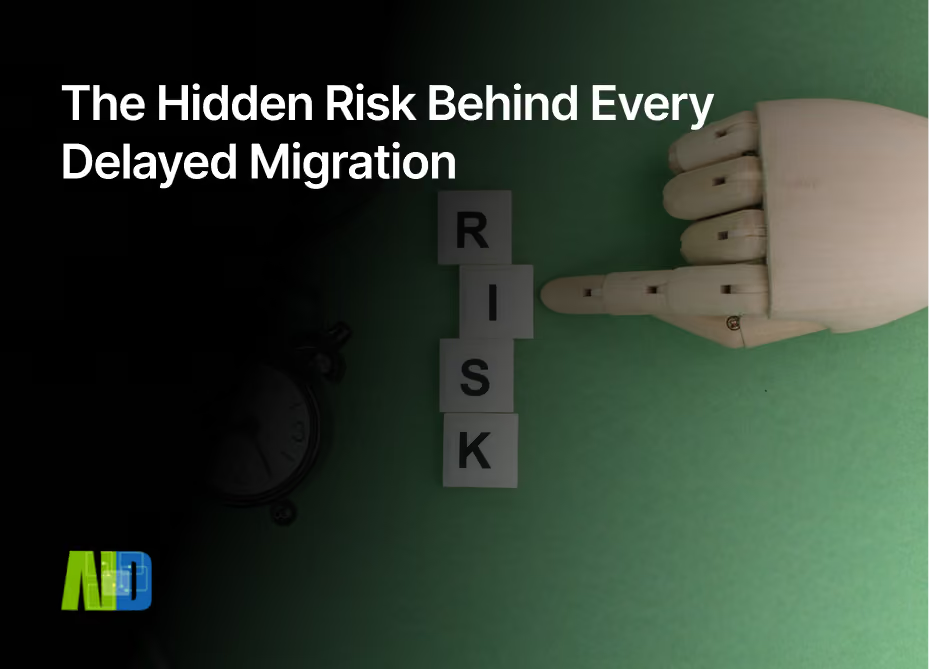
Migration budgets rarely break because data is too heavy to move. They break because leaders approve execution before the organization understands what the data means, where relationships sit, which rules are undocumented, and what must be true for the target system to operate with confidence.
That is why the failure pattern is so persistent.
Public migration research has cited that more than 80% of data migration projects run over time or budget, with average cost overruns of 30% and time overruns of 41%. The issue is not movement.
It is unmanaged pre-migration risk.
Executives are often shown migration plans as phases: extract, transform, load, test, cut over.
The sequencing looks disciplined.
The risk is that the most important work is hidden before phase one begins.
Legacy systems carry years of exceptions, naming conventions, duplicate structures, workarounds, and embedded business logic. Some of that logic is documented. Much of it lives inside reports, batch jobs, spreadsheets, downstream dependencies, and institutional memory.
When teams treat migration as a technical transfer, they discover meaning too late. A field maps cleanly but means something different by business unit. A code value looks obsolete but still drives an exception process. A relationship appears optional until reporting breaks.
These are not data issues after the fact.
They are decision failures before the move.
Manual mapping creates a false sense of control.
It gives the program artifacts, workshops, and spreadsheets.
But it also forces teams to interpret complex source structures one field at a time, often without enough context about business use, downstream impact, or validation rules.
For the CIO, that becomes delivery risk.
For the CFO, it becomes budget expansion.
For operations, it becomes rework after go-live.
For compliance teams, it becomes audit exposure when migrated data cannot be explained with confidence.
Government modernization shows the stakes clearly. Federal IT and cyber investments exceed $100B annually, and agencies have typically reported that about 80% goes to operations and maintenance of existing IT, including legacy systems.
That means modernization is not a discretionary technology refresh; it is an operating-cost and mission-continuity issue.
Many migration programs still rely on validation as a late-stage control.
Data moves. Loads fail. Exceptions are triaged. Business users reconcile outputs.
The project then burns time resolving issues that should have been visible earlier.
A better model shifts validation upstream.
Before execution, leaders need evidence across four questions:
This is where AI changes the economics of migration, but only when applied to the right problem.
The point is not to automate transfer faster.
The point is to automate understanding earlier.
Novacis Digital AI Data Migrator is positioned around that shift: using intelligent agents to understand source data in context, generate mappings, validate outputs, and prepare transformation-ready datasets before execution.
The operating value is not only speed; it is earlier visibility into structural risk, fewer manual scripts, and more confidence before the cutover clock starts.
Cutover is a technical milestone.
Trusted data is the business outcome.
Enterprise and government leaders should measure migration programs by how quickly migrated data becomes usable for operations, analytics, reporting, compliance, and decision-making.
A migration that completes on schedule but produces months of reconciliation is not successful.
It has moved cost from the project plan into the operating model.
This matters even more in public-sector environments, where legacy systems often support healthcare, infrastructure, tax processing, national security, and other essential missions.
Recent federal review work identified 11 critical legacy systems most in need of modernization; several used outdated languages, unsupported technology, or carried known cybersecurity vulnerabilities.
Incomplete modernization planning increases the likelihood of overruns, delays, and project failure.
The new executive standard is simple:
No migration should move faster than the organization can validate meaning, relationships, and readiness.
Before your next modernization initiative moves data, assess whether your teams can prove mapping accuracy, relationship preservation, validation coverage, and downstream readiness.
Novacis Digital helps enterprises and government agencies turn fragmented legacy data into execution-ready outputs with speed, control, and traceability.
Most migration projects do not fail because data is difficult to move. They fail because organizations begin execution before fully understanding what the data means, where dependencies exist, which business rules are undocumented, and what must be validated before the target system can operate reliably.
That is why delays and cost overruns remain common across large migration programs.
Public migration research has cited that more than 80% of data migration projects run over time or budget, with average cost overruns of 30% and time overruns of 41%.
The challenge is not simply moving data from one system to another.
It is identifying hidden risk before migration begins.
Migration plans are usually presented as structured technical phases:
On paper, the process appears straightforward.
In reality, the most critical risks exist before phase one starts.
Legacy systems often contain years of:
Some of this information is documented. Much of it exists across spreadsheets, downstream systems, reports, batch jobs, and institutional knowledge held by operational teams.
When organizations approach migration as a technical transfer alone, they often discover business meaning too late.
A field may map correctly but carry different meanings across business units. A code value may appear outdated but still drive exception handling. A relationship may seem optional until reporting, compliance, or downstream workflows break after go-live.
These are not technical failures after migration.
They are interpretation failures discovered too late in the process.
Many migration teams still depend heavily on spreadsheets and manual mapping exercises. While these methods create documentation, they also create a false sense of control.
Teams are often forced to interpret complex source structures field by field without enough context about:
That creates risk across the organization.
For CIOs, it increases delivery uncertainty. For CFOs, it expands budget exposure. For operations teams, it creates post-migration reconciliation work. For compliance leaders, it introduces audit and traceability concerns when migrated data cannot be validated confidently.
The challenge becomes even more significant in government modernization initiatives, where legacy systems often support healthcare, infrastructure, tax processing, and mission-critical public services.
Federal IT and cyber investments exceed $100B annually, and agencies have typically reported that about 80% goes to operations and maintenance of existing IT, including legacy systems.
In these environments, migration is not simply a technology refresh.
It is a continuity, governance, and operational resilience issue.
Many organizations still treat validation as a late-stage control process.
Data is migrated first. Problems are discovered later.
Teams then spend weeks or months:
By that stage, the cost of correction becomes significantly higher.
A stronger migration strategy shifts validation upstream before execution begins.
Before execution starts, leaders need clear answers to four critical questions:
Organizations that cannot confidently answer these questions often discover issues during testing, cutover, or post-go-live operations—when the cost and complexity of correction are significantly higher.
This is where many migration programs ultimately succeed or fail.
AI is changing migration economics, but not simply by accelerating data transfer.
The real value comes from improving understanding earlier in the process.
Instead of relying entirely on manual interpretation, AI can help organizations:
This reduces manual effort while improving visibility into structural and operational risk.
Solutions like Novacis Digital AI Data Migrator are designed around this approach by using intelligent agents to analyze source data in context, automate mapping processes, and validate transformation logic before cutover.
The benefit is not only speed.
It is greater confidence before operational risk reaches production environments.
Completing a migration project on schedule does not automatically make the migration successful.
The real outcome is whether migrated data becomes trusted and usable for:
A migration that completes on schedule but produces months of reconciliation is not successful.
It has moved cost from the project plan into the operating model.
This becomes especially important in public-sector modernization efforts, where legacy systems often support essential government and citizen services.
Incomplete modernization planning increases the risk of:
The new executive standard is becoming increasingly clear:
No migration initiative should move faster than the organization can validate meaning, relationships, and readiness.
Before launching a modernization initiative, organizations should evaluate whether teams can confidently validate:
Successful migration depends on more than moving data quickly.
It depends on understanding the data well enough to move with confidence.
Explore how Novacis Digital helps enterprises and government agencies transform fragmented legacy environments into validated, execution-ready data with greater speed, control, and traceability.